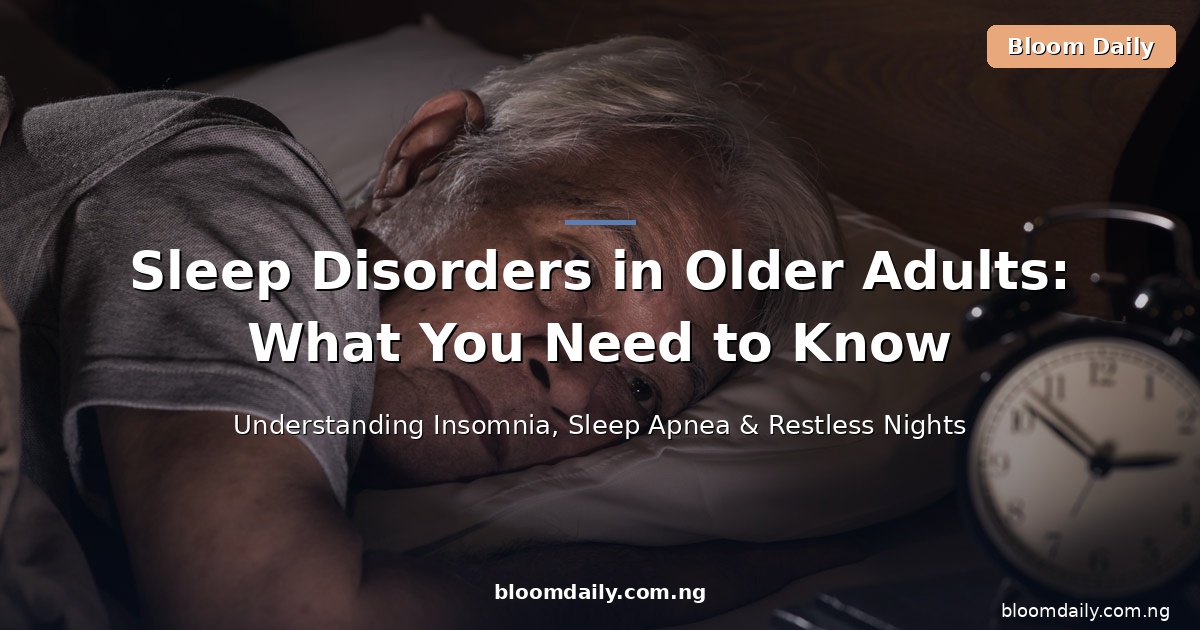
How Sleep Changes With Age
After age 60, sleep architecture changes significantly: deep sleep decreases by 70%, it becomes harder to fall asleep, nighttime awakenings increase, and circadian rhythms shift earlier.
Common Sleep Disorders in Seniors
- Insomnia: Affects 50% of older adults
- Sleep Apnea: Risk increases with age and weight gain
- Restless Leg Syndrome: More common in seniors
- REM Sleep Behavior Disorder: Acting out dreams during sleep
- Sundowning: Increased confusion and agitation in late afternoon/evening
Medication Considerations
Many medications affect sleep: diuretics (nighttime urination), beta-blockers (insomnia), steroids (alertness), and some antidepressants. Talk to your doctor about timing medications for minimal sleep disruption.
Sleep Strategies for Seniors
Maintain consistent sleep/wake times, get morning sunlight exposure, stay physically active, limit daytime napping to 20 minutes, and create a safe sleep environment to prevent falls.